Which Festool Dust Extractor Should You Buy? A Practical Guide
Table of Contents
- Start Here: Festool Dust Extractors Fall Into Four Real-World Categories
- Match the Extractor to Your Workflow
- Profile: Installer, Remodeler, or Punch-List Pro
- Profile: Finish Carpenter / Track Saw & Sander Power User
- Profile: Mobile Pro Who Needs Cordless + More Capacity
- Profile: Shop Owner / Cabinetmaker / Long Work Sessions
- Profile: Drywall, Fine Mineral Dust, or Filter-Clogging Work
- Profile: Cleanup-First Buyer
- Festool Dust Extractor Comparison Chart
- Final Buying Advice
- FAQs
Which Festool Dust Extractor Is Right for You? A Practical Buyer’s Guide
Festool makes some of the best dust extractors in the industry—but with so many models that look similar on paper, choosing the right one can feel overwhelming. The truth is, the best Festool dust extractor isn’t about chasing specs—it’s about matching the machine to how you actually work.
This guide breaks down the Festool extractors available on ToolsToday into clear use-cases, explains what really separates each class, and helps you quickly identify the model that fits your workflow.
Start Here: Festool Dust Extractors Fall Into Four Real-World Categories
1. Cleanup-Focused & Light Tool Use (CT 15 / CT 25)
These models are often chosen by users who want a high-quality HEPA vacuum first, with the option to connect tools when needed. They are excellent for jobsite cleanup, workshops, and mixed debris—not just fine sanding dust.
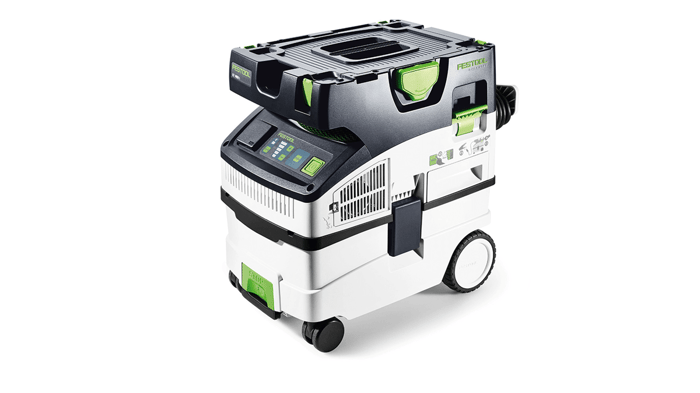
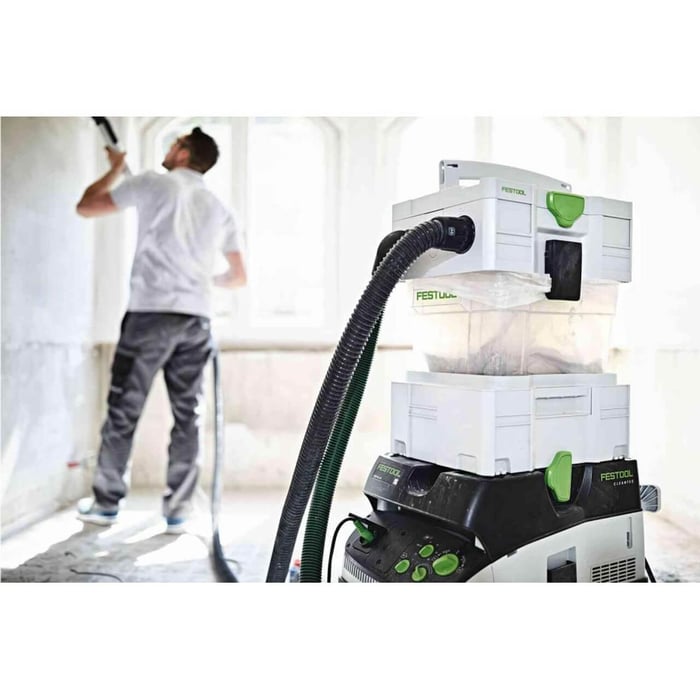
2. The “Do-Everything” Sweet Spot (CT MIDI)
If you want one extractor that handles sanding, track saws, routing, and general shop work without being bulky, the CT MIDI class is often the best balance of portability, capacity, and suction feel.
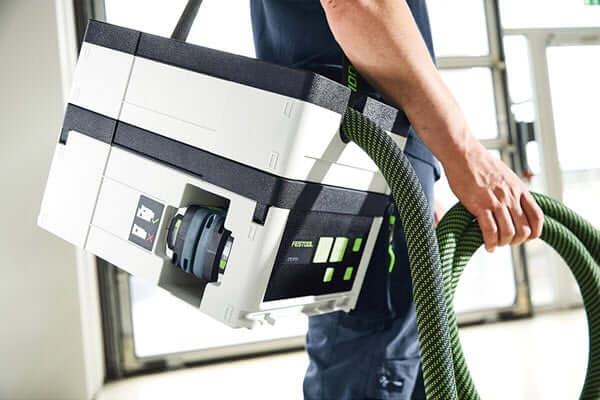
3. Cordless Mobility (CTC SYS & CTC MIDI)
Cordless Festool extractors are designed for installers, remodelers, and anyone working where power is limited or constantly changing. These excel at fine dust control on the move.
4. Shop-Level & High-Volume Work (CT 26 / CT 36 / CT 48)
These larger extractors are built for longer sessions, higher debris volume, and fewer interruptions. Some models add AutoClean for filter-clogging dust like drywall or heavy sanding.
Match the Extractor to Your Workflow
Profile: Installer, Remodeler, or Punch-List Pro
Best Fit: Cordless Systainer Extractors
- Compact, easy to carry, and fast to deploy
- Ideal for sanding, routing, drilling, and cleanup in finished spaces
- No outlet required
Recommended models:
CTC SYS I HEPA – Basic (576941)
CTC SYS I HEPA – Plus (577390)
Profile: Finish Carpenter / Track Saw & Sander Power User
Best Fit: CT MIDI I HEPA
- Strong extraction for fine dust
- Portable enough for jobsites, capable enough for daily use
- Bluetooth tool start adds real convenience
Recommended model:
CT MIDI I HEPA (578512)
Profile: Mobile Pro Who Needs Cordless + More Capacity
Best Fit: CTC MIDI I HEPA
- More capacity than SYS models
- Excellent for cordless track saw and sanding work
- Still easy to transport
Recommended models:
CTC MIDI I HEPA – Basic (577069)
CTC MIDI I HEPA – Plus (577506)
Profile: Shop Owner / Cabinetmaker / Long Work Sessions
Best Fit: CT 26 / CT 36
- More container volume = fewer bag changes
- Better suited for sustained extraction
- Works well as a “main” shop extractor
Recommended models:
CT 26 E HEPA (577083)
CT 26 EI HEPA (577871)
CT 36 EI HEPA (577872)
Profile: Drywall, Fine Mineral Dust, or Filter-Clogging Work
Best Fit: AutoClean (AC) Models
- Automatic filter cleaning during operation
- Maintains airflow during heavy fine-dust sessions
- Reduces downtime on demanding jobs
Recommended models:
CT 36 EI AC HEPA (577874)
CT 48 EI AC HEPA (577876)
Profile: Cleanup-First Buyer
Best Fit: CT 15 or CT 25
- Excellent HEPA filtration for jobsite and shop cleanup
- Handles mixed debris well
- Simple, durable, and easy to maintain
Recommended models:
CT 15 HEPA (578441)
CT 25 HEPA (577533)
Festool Dust Extractor Comparison Chart
| Model | Power | Capacity Class | HEPA | AutoClean | Best Use Case |
|---|---|---|---|---|---|
| CT 15 HEPA | Corded | Compact | Yes | No | Cleanup + light tool extraction |
| CT 25 HEPA | Corded | Medium | Yes | No | Cleanup with more volume |
| CT MIDI I HEPA | Corded | Mid-Size | Yes | No | Sanding, track saws, daily use |
| CTC SYS I HEPA | Cordless | Ultra-Portable | Yes | No | Installations, punch lists |
| CTC MIDI I HEPA | Cordless | Mid-Size | Yes | No | Mobile pro sanding & cutting |
| CT 36 / 48 EI AC | Corded | Large | Yes | Yes | Drywall & fine-dust heavy work |
Final Buying Advice
The “best” Festool dust extractor isn’t the biggest or newest—it’s the one you’ll actually connect every time. Choose based on where you work, how long you run tools, and how much dust you generate.
If you’re unsure between two sizes, most users regret buying too small more than buying slightly larger.
FAQs
What’s the difference between the main Festool dust extractor categories?
Festool extractors fit into four real-world categories: light cleanup & small tools (CT 15/CT 25), balanced all-around performance (CT MIDI), cordless mobility (CTC SYS & CTC MIDI), and shop-level high-volume work (CT 26/CT 36/CT 48). Choosing depends on your workflow, tool set, and how much dust volume you generate.
Do cordless Festool dust extractors work as well as corded ones?
Cordless extractors (CTC SYS and CTC MIDI models) deliver strong HEPA-rated suction and Bluetooth automatic start, making them excellent for mobile work and jobsites where power may not be convenient — though corded units generally offer more sustained capacity for heavy continuous use.
What size dust extractor should I choose for sanding versus routing and sawing?
If your work is mainly sanding and general shop cleanup, a mid-size model like CT MIDI offers balanced performance. For routing, track saws, or high-dust workflows, larger shop models with bigger capacity (CT 26/CT 36) reduce bag changes and maintain airflow.
What does “AutoClean” mean and why might I want it?
AutoClean (AC) refers to automatic filter cleaning that helps keep airflow consistent during heavy fine-dust jobs (like drywall or heavy sanding). This means fewer clogs, less downtime, and longer filter life, especially on large projects.
Are Festool dust extractors compatible with non-Festool tools?
Yes — Festool extractors will work with other brands, but optimal performance is achieved when paired with Festool tools designed for the system. Fit and airflow can vary with different tool brands or hose adaptors.