The Truth About Cabinet Doors: What Most Shops Actually Do Today
Table of Contents
- The Old Way: Building Raised Panel Doors from Scratch
- What Most Cabinet Shops Do Today
- Do Cabinet Doors Still Need Floating Panels?
- What Do Cabinet Shops Actually Make In-House?
- When It Still Makes Sense to Make Your Own Doors
- When It Does Not
- What This Means for Your Tooling
- The Real Shift in Cabinet Making
- Final Thoughts
- FAQs
A lot of people assume cabinet shops make everything themselves: the boxes, the drawers, the doors, the moldings, all of it.
Sometimes that is true. But in many modern shops, it is not.
Today, plenty of cabinet shops build the cabinet boxes in-house, then outsource some or all of the doors and drawer fronts. Others make simple shaker doors themselves but skip more labor-intensive raised-panel work. And many shops—especially those building modern kitchens, commercial cabinetry, or painted projects—lean heavily on slab doors made from MDF, plywood, or other engineered materials.
In other words, the “traditional” picture of a cabinet shop making every door from raw lumber is no longer the default.
This matters for more than just workflow. It affects which tools shops actually need, which door styles make sense, and whether bits like raised panel cutters are still essential—or mostly niche.
Here is the truth about cabinet doors, what most shops actually do today, and how modern materials have changed the conversation.
The Old Way: Building Raised Panel Doors from Scratch
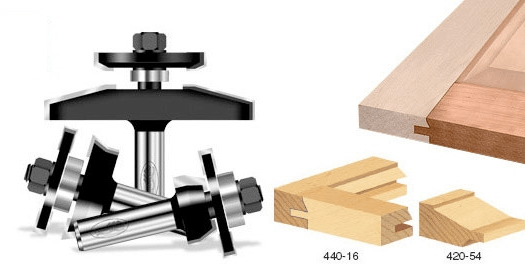
For many years, the classic cabinet door was a five-piece door: two stiles, two rails, and a center panel. In more traditional work, that center panel was often a raised panel, shaped with a large router bit and captured in grooves cut into the frame.
There were good reasons for this approach. Solid wood moves with seasonal humidity changes, expanding and contracting across the grain. A floating panel allowed the center of the door to move without cracking, splitting, or pushing the frame apart. In solid-wood cabinetry, this was smart construction—not just decoration.
That construction method is still valid today, especially in high-end custom work, inset cabinetry, furniture-style projects, and traditional designs. But it is no longer the only way—and in many shops, it is no longer the most practical way.
Raised panel doors take more tooling, more setup, more material prep, and more skill than simpler door styles. They also require careful routing and safe handling, since raised panel bits are large cutters typically used in a router table. For many production-minded cabinet shops, the time and complexity no longer make sense.
What Most Cabinet Shops Do Today
1. Many Shops Buy Doors Instead of Making Them
One of the biggest realities in the industry is that many cabinet shops do not make all their own doors. They may build the boxes, install the kitchens, manage the finish details, and handle the client relationship—but source the doors and drawer fronts from a specialized manufacturer.
Why? Because outsourcing doors can save a huge amount of labor, reduce finishing headaches, and improve consistency. A good door supplier can often produce shaker, slab, or raised-panel doors faster and more predictably than a small or mid-sized shop trying to do everything in-house.
That is especially true when the shop is busy, working on tight timelines, or trying to avoid tying up labor in repetitive door production.
For many shops, outsourcing doors is not a sign of lower quality. It is simply specialization.
2. Shaker Doors Became the Modern Standard
If one style has become the default for modern cabinet production, it is the shaker door.
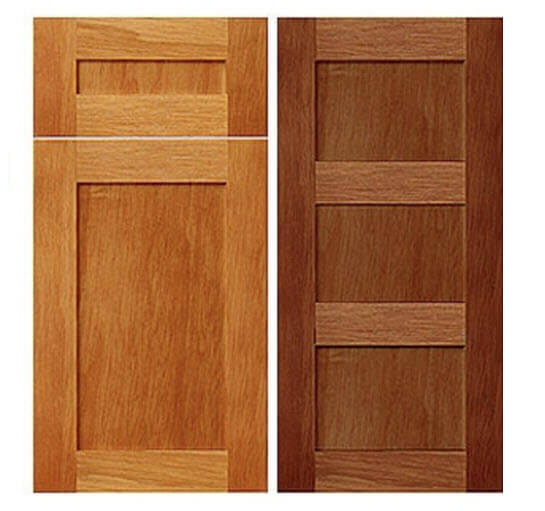
A shaker-style door is still technically a frame-and-panel door, but the center panel is flat rather than raised. That makes it cleaner, simpler, easier to build, and easier to fit into a wide range of designs—from traditional painted kitchens to transitional spaces to many contemporary interiors.
For cabinet shops that do make doors in-house, shaker doors are often the sweet spot. They look custom without requiring the same level of tooling and setup as raised-panel doors. They can be made from hardwood, MDF, plywood, or combinations of materials depending on the application and finish.
From a production standpoint, shaker doors also make more sense for today’s workflows. They are straightforward, repeatable, and easier to scale.
3. Slab Doors Keep Gaining Ground
Slab doors are another major reason raised-panel tooling is less central than it once was.
A slab door is simply a flat panel door, often made from MDF, plywood, particleboard with a laminate face, or other engineered sheet goods. In modern kitchens, frameless cabinetry, commercial interiors, and contemporary residential projects, slab doors are everywhere.
They are fast to produce, easy to process on a CNC, and compatible with paint, veneer, laminate, thermofoil, and edge banding workflows. They also align well with the clean-line aesthetics many buyers now prefer.
If a shop mostly builds slab doors, there is little reason to invest heavily in traditional raised-panel tooling.
4. Some Shops Simulate “Panel” Looks Without Traditional Joinery
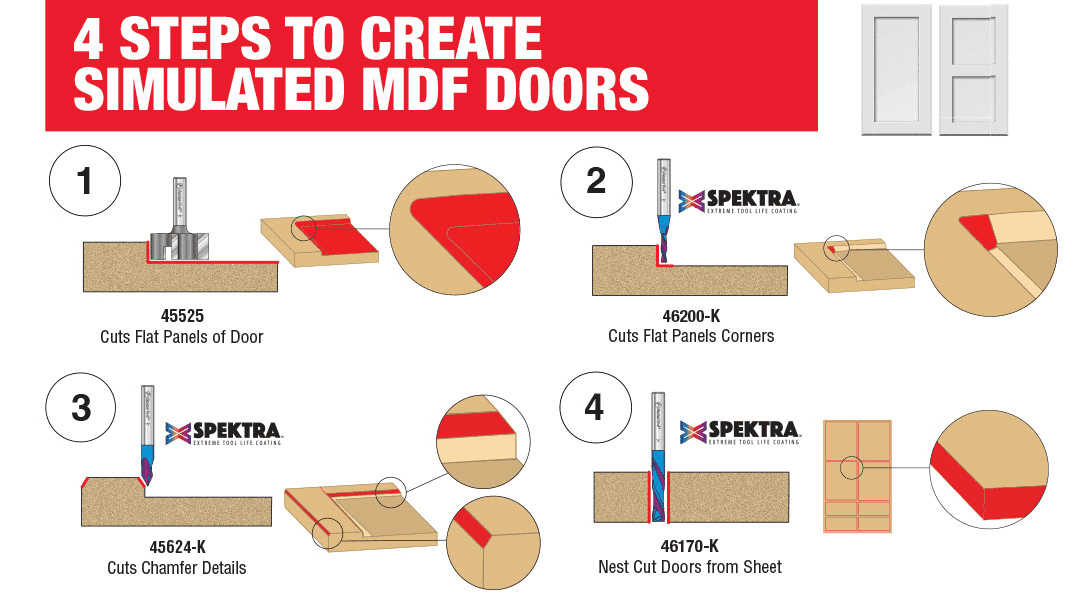
There is also a growing middle ground. Some shops use CNC routing, grooves, V-cuts, or shallow profiling to create the look of a panel detail without building a traditional five-piece door.
That approach will not replace true joinery in every application, but it can create attractive, repeatable visual detail with less labor. For painted work especially, some shops prefer simplified methods that still deliver the style the customer wants.
Do Cabinet Doors Still Need Floating Panels?
Sometimes yes. Sometimes no. It depends mostly on the material.
The whole reason floating panels became so important in cabinet doors was wood movement. A solid-wood center panel expands and contracts across the grain as humidity changes. If that panel is glued rigidly into a frame, the door can crack, warp, or fail over time.
That is why floating construction still matters when you are building doors from solid wood.
But many modern cabinet doors are not made that way anymore.
MDF, plywood, and other engineered panels are much more dimensionally stable than solid wood. They do not move the same way, and they do not require the same kind of allowance. In painted cabinetry especially, engineered panels often make more sense because they are flatter, more stable, and less likely to telegraph grain or seasonal movement issues.
So yes, floating panels are still important in traditional solid-wood door construction. But no, they are not universally necessary in modern cabinet work. In many shops, modern materials have reduced the need for floating raised-panel construction altogether.
What Do Cabinet Shops Actually Make In-House?
This is where expectations and reality often part ways.
Many shops still build a lot in-house—but not necessarily everything.
Cabinet Boxes
Cabinet boxes are very often built in-house. This is where shops can control dimensions, materials, hardware prep, and fit for the specific project. With CNC routers and better production workflows, casework is one of the most logical things to keep under direct shop control.
Doors and Drawer Fronts
This varies a lot. Some shops build them. Some outsource all of them. Some only make simple shaker or slab doors in-house and outsource more decorative or time-consuming styles. Door production tends to be one of the first areas shops outsource when they want to save labor or improve throughput.
Drawer Boxes
Drawer boxes are mixed. Some cabinet shops make them in-house, especially if they want full control over sizing, joinery, and material selection. Others buy prefinished drawer box components or order complete drawer boxes to save time.
Moldings and Decorative Trim
These are often purchased rather than milled in-house, unless the shop specializes in custom architectural work or furniture-style cabinetry. It is usually more efficient to buy standard molding profiles than to produce every decorative element from scratch.
Specialty Components
Panels, range hood parts, appliance surrounds, floating shelves, toe-kick skins, fillers, and custom details may be built in-house if they are project-specific. This is often where a cabinet shop adds real value: not by making every repetitive part, but by solving unusual details cleanly.
The key point is this: modern cabinet shops are often part manufacturer, part assembler, part installer, and part project manager. The most efficient shops do not necessarily make everything. They make the parts that make sense to control—and source the rest strategically.
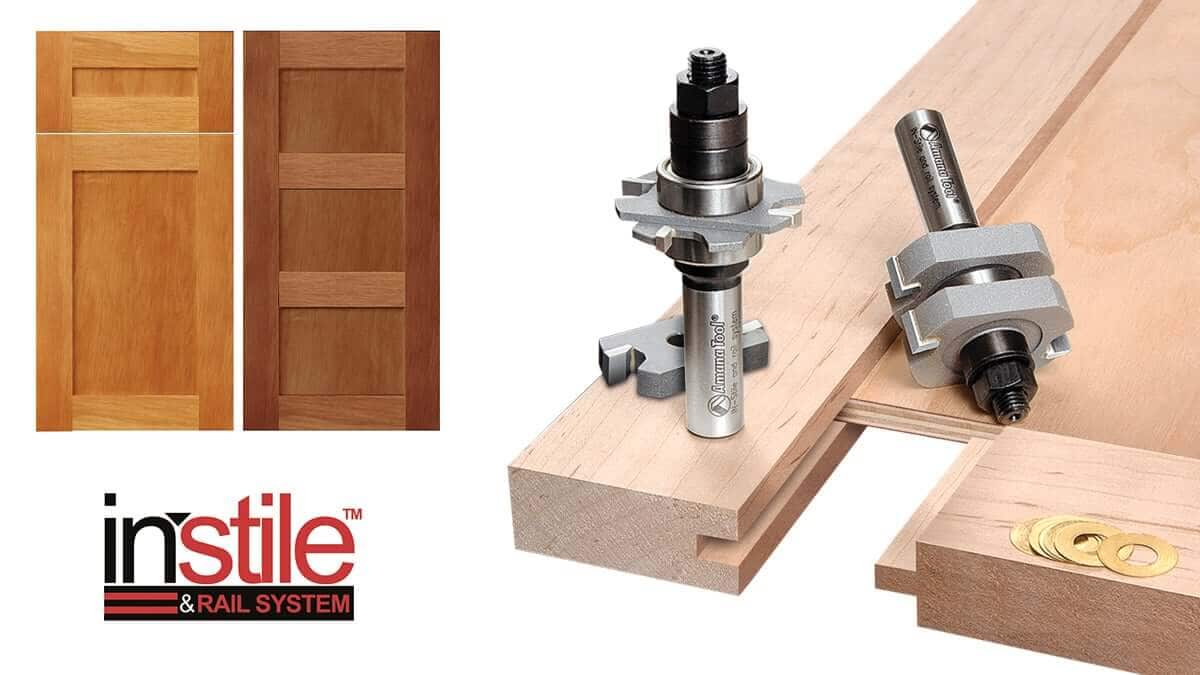
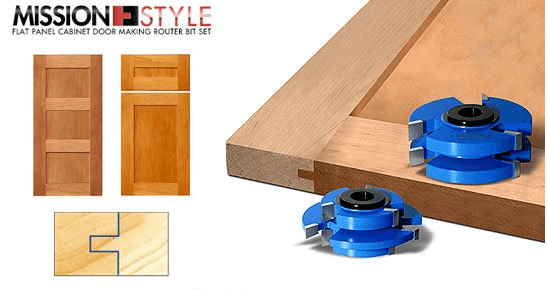 Shaper-cutters for making cabinet doors in a high-production environment - all doors, all day long
When It Still Makes Sense to Make Your Own Doors
Making doors in-house still makes sense in plenty of situations.
If your shop focuses on high-end custom work, unusual dimensions, matching existing cabinetry, traditional details, or furniture-style builds, in-house door production can be a major advantage. It gives you more control over material selection, profile details, sizing, grain match, and finishing workflow.
It can also make sense if you do enough door volume to justify the tooling and labor, or if your brand is built around craftsmanship and fully custom work.
And of course, some shops simply prefer to keep more of the process under one roof. That can be a valid business choice—if the labor and margins support it.
When It Does Not
For many shops, making every door in-house does not pencil out.
If your workflow is centered on efficient casework production, painted shaker jobs, slab doors, commercial interiors, or fast-turn residential installs, it may be smarter to outsource at least part of the door work. The same is true if your team is small, your schedule is tight, or your existing equipment is better suited to cutting cabinet parts than running complex door profiles.
There is no prize for doing more in-house than the business can support. In many cases, the smarter move is to keep your labor focused on high-value project work and let dedicated suppliers handle repeatable components.
What This Means for Your Tooling
This shift in cabinet construction changes which router bits matter most.
If your shop mainly builds cabinet boxes, shelves, drawer parts, and slab components, your core tooling is likely to revolve around sheet processing, joinery, trimming, and edge finishing. Compression spirals, downcut and upcut spirals, straight bits, rabbeting bits, flush trim bits (and flush trim with bevel bits), roundover bits, chamfer bits, and V-groove bits all support those real-world workflows.
Raised panel bits, by contrast, are still useful—but mostly for shops doing traditional custom doors in-house.
That does not make them obsolete. It just makes them more specialized than they used to be.
If your shop rarely builds raised-panel doors, that is not a gap in your operation. It may simply reflect where the industry has moved.
The Real Shift in Cabinet Making
The biggest change in cabinet doors is not just style. It is specialization.
Modern cabinet shops often win by doing fewer things better. They build the boxes efficiently. They choose the right materials for the project. They decide which parts should stay in-house and which should be sourced. And they invest in tooling that matches the way they actually work—not the way cabinet shops worked 30 years ago.
That is why shaker and slab doors are so common. That is why outsourced door programs are so common. And that is why traditional raised-panel bits, while still important in some shops, are no longer the universal must-have they once were.
The truth about cabinet doors is simple: most shops are not trying to make every possible door style. They are trying to build better projects, more efficiently, with the right mix of craftsmanship, materials, and workflow.
Final Thoughts
If you are building or expanding a cabinet shop today, the right question is not “How did shops used to do it?”
It is “What makes sense for the kind of work we actually do?”
For some shops, that still means making traditional doors from scratch. For many others, it means shaker doors, slab doors, outsourced components, and a more selective approach to tooling.
And that is not cutting corners. It is modern cabinet making.
FAQs
Do most cabinet shops make their own doors?
No. Many cabinet shops outsource some or all of their cabinet doors to specialized manufacturers. This saves time, improves consistency, and allows the shop to focus on building and installing cabinet boxes.
What is the most common cabinet door style today?
Shaker-style doors are the most common in modern cabinetry. They are simple, versatile, and easier to produce than traditional raised-panel doors, making them popular in both custom and production shops.
Are raised panel cabinet doors outdated?
Not necessarily, but they are less common than they used to be. Raised panel doors are still used in traditional and high-end custom cabinetry, but many modern shops prefer shaker or slab doors for efficiency and style.
Do cabinet doors need floating panels?
Floating panels are important when using solid wood because they allow for natural expansion and contraction. However, with modern materials like MDF and plywood, floating panels are often not necessary.
Is it better to make cabinet doors or buy them?
It depends on your shop’s workflow and volume. Making doors in-house offers more control and customization, while buying doors saves time and can improve efficiency—especially for standard styles like shaker or slab doors.