CNC vs Table Saw: What Small Shops Actually Use in 2026
Table of Contents
- Quick Take
- Can a CNC Replace a Table Saw?
- Where CNC Replaces the Table Saw
- Where the Table Saw Still Wins
- CNC vs Table Saw: Accuracy, Speed, and Cost
- The Hybrid Shop: Why Most Woodworkers Use Both
- What the Data Says: Real Tool Sales Tell the Same Story
- Should You Buy a CNC or a Table Saw First?
- What Should You Buy First?
- Final Takeaway
- FAQs
Quick Take
- CNC replaces repeatable, sheet-based work.
- Table saw dominates fast, flexible, solid wood cuts.
- Most shops use both.
Reality check: space constraints are real.
A full-size CNC and a table saw can each dominate a small shop. Many hobbyists end up choosing one—or downsizing to a benchtop CNC or compact saw—based purely on available space, not just capability.
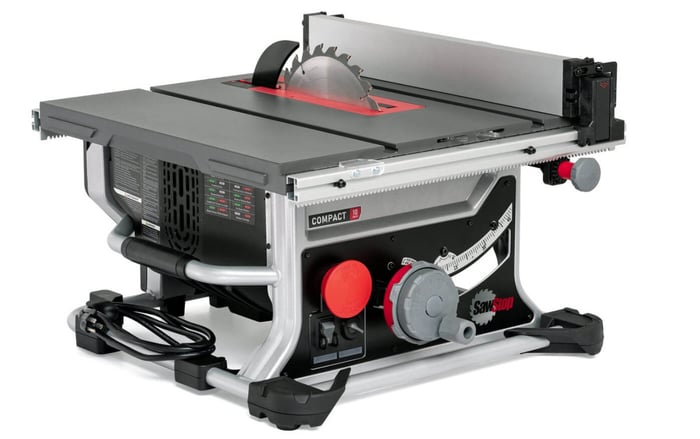 SawStop CTS-120A60 Compact Table Saw No room for a full cabinet saw? Roll this out when you need it, tuck it away when you don’t - precision without the permanent footprint.
Can a CNC Replace a Table Saw?
Short answer: Sometimes.
Long answer: It depends entirely on your workflow.
A CNC router can absolutely take over certain tasks traditionally done on a table saw—especially when you're working with sheet goods, repeatable parts, or complex geometries. But for many shops, especially smaller ones, a table saw remains the fastest and most flexible tool for everyday cutting.
The real question isn’t which is better—it’s what kind of work are you doing most often?
Where CNC Replaces the Table Saw
Sheet Goods & Nested Parts
If your workflow revolves around plywood, MDF, or melamine, CNC is a game changer. Instead of breaking down sheets manually, you can:
- Nest parts efficiently.
- Maximize material yield.
- Reduce handling time.
For cabinet shops and furniture makers, this alone can justify the investment.
Repeat Production
Once a file is dialed in, a CNC delivers identical results every time. No measuring, no resetting fences, no drift.
This is especially valuable for:
- Cabinet components.
- Drawer boxes.
- Batch furniture parts.
Complex Shapes & Joinery
CNC routers unlock shapes that are either difficult or impossible on a table saw:
- Curves and contours.
- Engraving and inlays.
- Advanced joinery, including dados, rabbets, and pockets in one pass.
This is where CNC moves from “replacement” to “capability expansion.”
Where the Table Saw Still Wins
Solid Wood Ripping
Nothing beats a table saw for ripping hardwood quickly and efficiently. CNC routers can do it—but they’re slower, generate more waste, and aren’t optimized for long, straight cuts in thick stock.
Quick One-Off Cuts
Need to trim 1/4" off a board? Cut a panel down quickly?
Walking over to a table saw is usually faster than:
- Opening software.
- Setting up a toolpath.
- Securing material.
For spontaneous, low-volume work, the table saw is still king. 👑
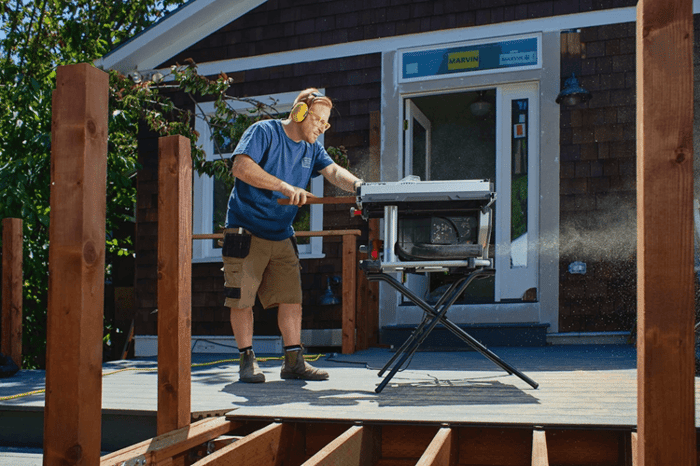
Jobsite & Flexibility
Table saws go where CNC machines can’t:
- On-site installs.
- Small garages.
- Temporary workspaces.
A CNC requires space, setup, and stability. A table saw just needs power and a flat surface.
CNC vs Table Saw: Accuracy, Speed, and Cost
Accuracy
CNC: Extremely precise once calibrated; excels in repeatability.
Table saw: Highly accurate in skilled hands, but depends on setup and consistency.
Speed
CNC: Faster for batch production and nested sheets.
Table saw: Faster for single cuts and small tasks.
Cost
CNC: Higher upfront investment, plus software, workholding, dust collection, and tooling.
Table saw: Lower entry cost, but more labor over time.
There’s also a hidden cost factor: time vs labor. CNC machines reduce labor but require setup time and programming. Table saws are labor-intensive but immediate.
The Hybrid Shop: Why Most Woodworkers Use Both
In 2026, the “either/or” debate is largely outdated.
Most successful small shops use:
- CNC for production and precision work.
- Table saw for prep, flexibility, and solid wood processing.
A common workflow looks like this:
- Break down rough material with a table saw.
- Run repeatable parts on the CNC.
- Handle adjustments and one-offs back at the table saw.
This hybrid approach saves time, expands capabilities, and keeps workflows flexible.
What the Data Says: Real Tool Sales Tell the Same Story
Looking at real purchasing behavior tells an interesting story: CNC tooling is growing, but table saw tooling remains strong.
CNC Tooling Is Growing Fast
Router bits designed for CNC—especially compression, downcut, and specialty spiral bits—continue to see strong demand. Shops investing in CNC often standardize around a small number of high-performance tools that handle most of their day-to-day work.
Fewer SKUs, Higher Value
Unlike saw blades, where users may own many variations for different machines and materials, CNC users often rely on a tighter set of go-to bits. That can mean higher usage per bit and stronger demand for durability, cut quality, and consistent performance.
Table Saw Blades Remain Essential
Despite CNC growth, table saw blades are not disappearing. They remain essential for:
- Solid wood applications.
- General woodworking.
- Cabinet shops and hybrid production environments.
- Entry-level, compact, and mobile setups.
The takeaway: CNC adoption is rising, but it is not replacing the table saw. It is complementing it.
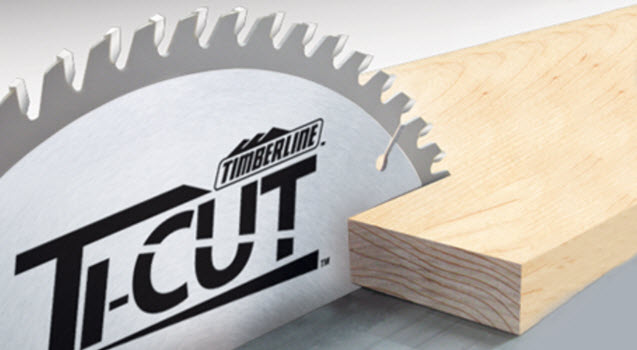 Timberline Ti-Cut™ Saw Blades are economical but feature large heat-treated carbide tips precisely ground for smooth cuts every time.
Should You Buy a CNC or a Table Saw First?
For Hobbyists
For most hobbyists, a table saw is still the more practical first purchase. It is more affordable, easier to learn, and useful for a wider range of basic woodworking tasks.
A CNC becomes more attractive when you want to automate repeat projects, make signs or detailed parts, or produce the same item consistently.
For Small Businesses
For a small business, the answer depends on what you sell.
- If you make cabinets, signs, templates, furniture parts, or repeatable products, a CNC may become the better investment.
- If you do custom woodworking, repairs, installations, or varied one-off projects, a table saw may still come first.
Many small shops eventually need both—but the first purchase should match the work that brings in revenue fastest.
For Production Shops
In production environments, CNC often becomes essential. It improves repeatability, reduces manual layout, and helps streamline batch work.
Even then, the table saw usually stays in the shop. It shifts into a supporting role for material prep, quick adjustments, and specialty cuts.
What Should You Buy First?
If you are just starting out, buy the tool that solves your most common problem.
- Cutting boards, hardwood, and quick parts? Start with a table saw.
- Cutting sheet goods, repeatable parts, signs, or cabinet components? Consider a CNC.
- Already running both? Focus on better tooling. The right carbide-tipped saw blade or cnc router bit can make the tools you already own perform better.
For many small shops, the smartest upgrade is not always a new machine. Sometimes it is a cleaner-cutting saw blade, a longer-lasting CNC bit, or a tooling setup that reduces sanding, rework, and wasted material.
Final Takeaway
CNC routers and table saws are not really competitors. They are specialists.
- A CNC excels at automation, repeatability, and precision.
- A table saw dominates speed, flexibility, and solid wood cutting.
If you are building a modern small shop in 2026, the smartest move is not simply choosing between them. It is understanding when to use each—and choosing the tooling that helps each machine do its best work.
FAQs
Can a CNC router replace a table saw?
Not completely. A CNC can handle sheet goods, repeatable parts, and complex cuts—but a table saw is still faster and more practical for quick, straight cuts and solid wood work.
Do I still need a table saw if I have a CNC?
In most cases, yes. Many shops use CNC for production and precision work, and a table saw for fast sizing, trimming, and one-off cuts.
Which is better for cutting plywood: CNC or table saw?
CNC is better for nested parts and repeatability. A table saw is better for quickly breaking down sheets or making simple straight cuts.
Is a CNC more accurate than a table saw?
For repeatable parts, yes—CNC wins. For single cuts, both can be highly accurate, but CNC removes operator variability.
What’s better for cabinet making: CNC or table saw?
CNC dominates for modern cabinet production (especially panel processing and joinery). Table saws are still widely used for solid wood components and quick adjustments.
Should a small shop buy a CNC or a table saw first?
Start with a table saw for flexibility and lower cost. Add a CNC when you need repeatability, higher production, or more complex designs.