Which CNC Machine Is Right for You? A Real-World Buyer’s Guide
Table of Contents
- CNC Machines: A Real-World Buyer’s Guide Based on What You Actually Make
- Quick Take: Best CNC Machine by Buyer Type
- Before You Buy: 5 Questions That Matter More Than Specs
- If You Make Signs, Home Decor, or Personalized Gifts
- If You Make Furniture, Cabinet Parts, or Bigger Projects
- If You Want Jewelry, Fine Detail, or Precision Desktop Work
- If You’re Starting a Side Hustle (and Don’t Want to Rebuy Too Soon)
- If You Already Run a Shop and Need Throughput
- Common CNC Buying Mistakes
- Upgrade Path: From Curious Beginner to Serious CNC Business
- Final Verdict: Which CNC Should You Buy?
- FAQs
CNC Machines: A Real-World Buyer’s Guide Based on What You Actually Make
Buying your first (or next) CNC machine can feel overwhelming fast. Desktop? Benchtop? Production-grade? Under $2,000 or over $8,000?
Here’s the truth: the “best” CNC machine isn’t about specs alone — it’s about what you’re making, how much space you have, and whether this is a hobby, side hustle, or serious business.
If you’re carving signs in a garage, your ideal machine may look very different from someone cutting cabinet parts or scaling a product line.
Bottom line: Buy for what you make now — but don’t ignore where you’re headed.
Quick Take: Best CNC Machine by Buyer Type
| If You Are... | Best Fit | Why It Makes Sense |
|---|---|---|
| Testing CNC for the first time | Next Wave Shark SD Series | Affordable entry point, lower commitment |
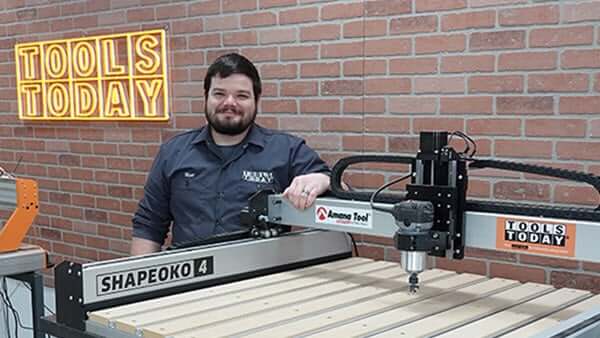
| Wanting your first serious CNC | Shapeoko 4 / Shapeoko Pro | Strong capability without huge investment |
| Building a side hustle or growing shop | Stepcraft D-Series or M-Series | Versatile, scalable, strong long-term growth path |
| Running production or larger commercial work | Axiom Pro / Elite Series | Premium build, larger format, business-level throughput |
| Jewelry, engraving, ultra-precision desktop work | Carbide 3D Nomad 3 | Compact, detailed, ideal for small-format precision |
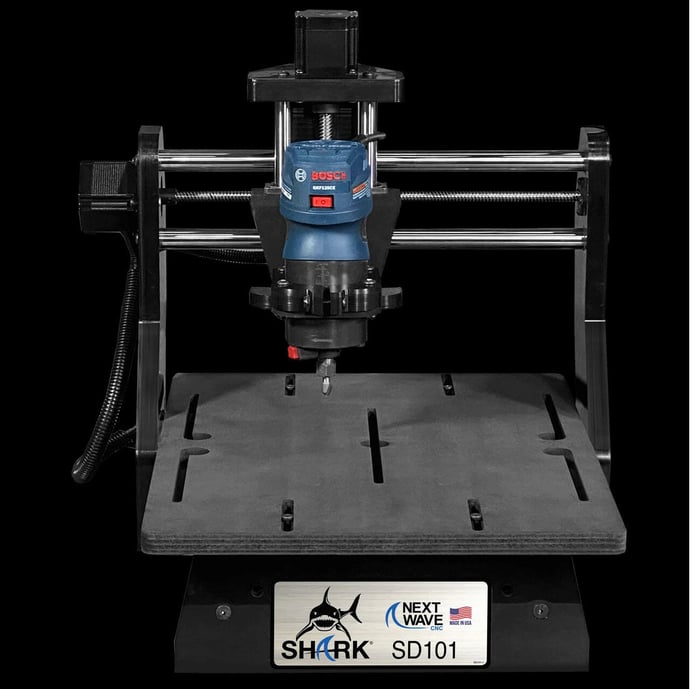 The SHARK SD101®, together with Next Wave WIZARD® Software, offer the shortest learning curve on a CNC machine. If you want to try CNC without learning more robust design software, this setup is made for you.
Before You Buy: 5 Questions That Matter More Than Specs
1. What are you actually making?
Signs, gifts, and personalized products? You may not need industrial scale.
Furniture, cabinetry, or larger panels? Work area becomes critical.
Jewelry or detailed engraving? Precision may matter more than size.
2. How much shop space do you have?
Many hobbyists don’t have room for a full-size CNC plus table saw, dust collection, and assembly space. Smaller machines can still build real products — especially if portability matters.
3. Is this a hobby, side hustle, or business?
A cheaper CNC can absolutely get you started — but if you plan to sell products, outgrowing your machine too quickly can cost more in the long run.
4. What materials are you cutting?
Wood, plastics, signs, and soft materials have very different demands than hardwoods, aluminum, or production-grade materials.
5. Do you want room to grow?
The cheapest CNC is often the one you replace first.
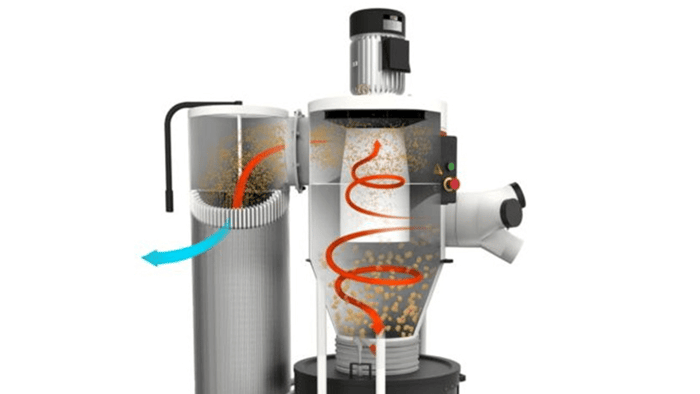
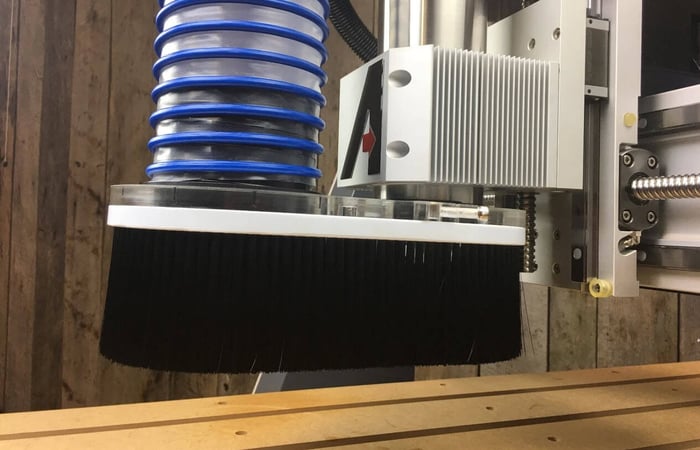 Axiom Dust Shoe Don’t forget the essentials—CNC machines rely on accessories like dust boots, dust collection, and workholding to perform at their best.
If You Make Signs, Home Decor, or Personalized Gifts
Best fit: Carbide 3D's Shapeoko, Stepcraft D-Series, Next Wave Shark HD Series
If your focus is:
- Custom signs
- Name plaques
- Etsy products
- Wall decor
- Small business branding products
You likely need versatility, manageable footprint, and good software support more than industrial capacity.
Strongest long-term option: Stepcraft D-Series
Why? It offers a better “grow with you” path than many entry machines while staying realistic for smaller shops.
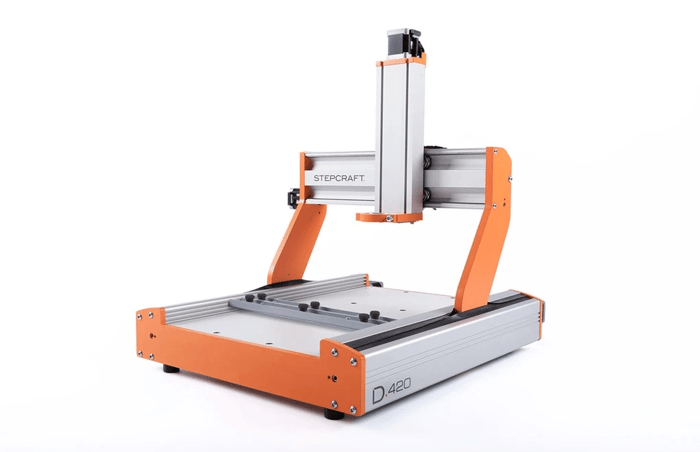 The STEPCRAFT D-Series is the industries leading CNC solution for the hobbyist/maker.
If You Make Furniture, Cabinet Parts, or Bigger Projects
Best fit: Stepcraft M-Series, Shapeoko XXL, Axiom Basic/Pro
Larger projects demand:
- Bigger cutting area
- Better rigidity
- Longer run reliability
- Less compromise on material size
If you’re regularly breaking down sheet goods, cabinetry parts, or larger furniture components, machine footprint starts becoming a business decision — not just a convenience issue.
Best scalability play: Stepcraft M-Series
Best premium jump: Axiom Pro
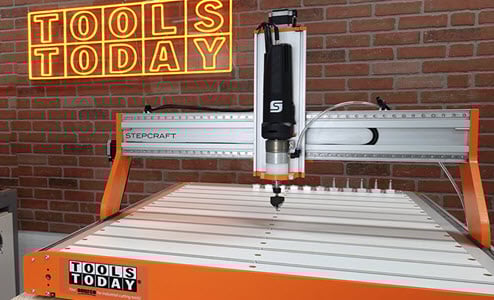 The STEPCRAFT M-Series is the most mobile and versatile CNC milling machine in the world.
 If You Want Jewelry, Fine Detail, or Precision Desktop Work
Best fit: Carbide 3D Nomad 3
For:
- Jewelry
- Small inlays
- Detailed engraving
- Prototyping
The Nomad’s smaller footprint can actually be an advantage — especially where space is limited.
It’s not for sheet goods. It’s for precision.
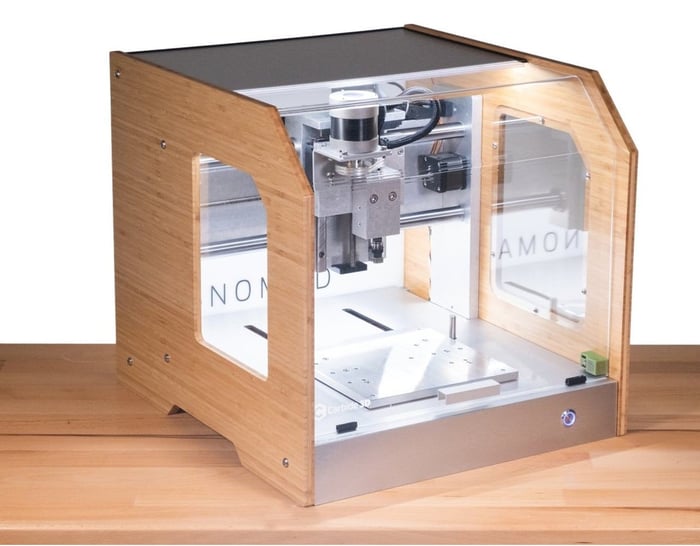 Nomad 3 Desktop CNC Machine Fully enclosed desktop CNC mill for precision work in any environment. Cuts metal, wood, wax, and PCBs. Quiet enough for an office. Free CAD/CAM included.
If You’re Starting a Side Hustle (and Don’t Want to Rebuy Too Soon)
This is where many buyers make their biggest mistake:
They buy only for today’s budget, not tomorrow’s demand.
If you’re serious about monetizing CNC — selling signs, products, or production work — flexibility matters.
Stepcraft stands out here because it often bridges the gap between hobbyist affordability and business scalability better than pure entry-level machines.
That doesn’t mean everyone needs the biggest machine now — but planning ahead matters.
If You Already Run a Shop and Need Throughput
Best fit: Axiom Pro / Elite
For established businesses, downtime, rigidity, and larger cutting areas can outweigh initial savings.
Axiom’s lineup generally makes more sense when:
- You already sell consistently
- You need larger-format capability
- You want premium build quality
- Your machine is revenue infrastructure, not experimentation
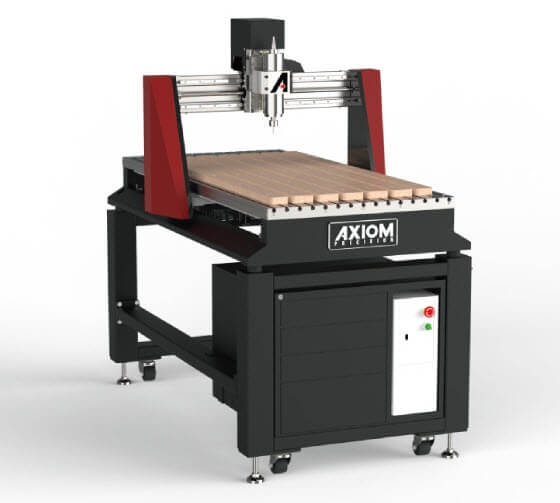 The Axiom Elite CNC router represents the most advanced technology that is primarily found on machines only in industrial shops.
Common CNC Buying Mistakes
Buying too small
Saving money upfront can create production bottlenecks later.
Buying too cheap
Low price can mean lower rigidity, slower workflows, or faster replacement.
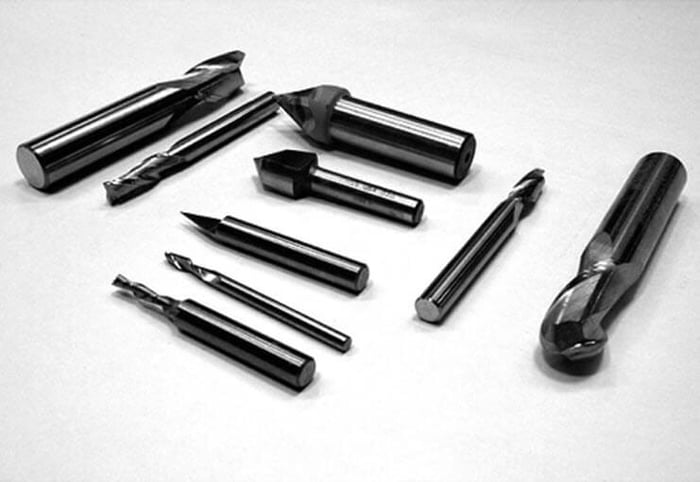
Ignoring tooling, dust collection, and software
Your machine is only part of the system.
Forgetting your actual workflow
The “best” CNC on paper may be wrong for your shop layout, materials, or business model.
Upgrade Path: From Curious Beginner to Serious CNC Business
Beginner: Next Wave Shark / Shapeoko Entry
Growth: Stepcraft D-Series → M-Series
Production: Axiom Pro / Elite
This path won’t fit everyone — but thinking in stages can prevent expensive mistakes.
Final Verdict: Which CNC Should You Buy?
If you’re brand new: Start affordable, but don’t undersize yourself.
If you want the best balance of flexibility and growth: Stepcraft often offers one of the smartest long-term paths.
If you need premium throughput: Axiom deserves serious attention.
If space is tight: Shapeoko, Shark, or Nomad may be exactly right.
Most important: Don’t buy the machine that looks best online — buy the one that fits what you actually plan to build.
Because the right CNC isn’t just a machine.
It’s part of your workflow, your space, and potentially your business.
FAQs
What’s the best CNC machine for a complete beginner?
For most beginners, a smaller Next Wave Shark or entry-level Shapeoko offers a lower-cost way to learn CNC basics without jumping straight into a larger investment.
Is Stepcraft better for long-term growth than cheaper CNC machines?
For many users, yes. Stepcraft often offers a stronger upgrade path from hobby projects to small business production, making it appealing for buyers who want room to grow.
Do I need a large CNC machine to start a CNC side hustle?
Not necessarily. Many successful sign makers, gift shops, and product-based businesses start with smaller machines and upgrade as demand increases.
What CNC machine is best for furniture or cabinet projects?
Larger-format machines like Stepcraft M-Series, Shapeoko XXL, or Axiom models are generally better suited for bigger workpieces, cabinetry components, and furniture parts.
Is a desktop CNC like the Nomad 3 powerful enough for real projects?
Yes — for the right projects. Desktop CNCs excel at precision work like jewelry, engraving, and small detailed parts, but they are not designed for large sheet goods or furniture-scale production.