11 Router Bits Every Cabinet Shop Should Own
Table of Contents
A cabinet shop cutting sheet goods on a CNC needs a different bit collection from a shop building doors at a router table. Even within one shop, the right bit for cutting a cabinet side may be wrong for routing a shallow dado or trimming an applied edge.
You don't need all 11. Start with the bits that support the work your shop performs in-house. This guide shows where each bit earns its place—and which ones can wait until your jobs call for them.
Looking for a general-purpose starter collection? See 11 Router Bits Every Woodworker Should Own. This guide focuses on cabinet production.
For Cutting Cabinet Parts and Panels
1. Compression Spiral Bit: Clean Both Faces of Sheet Goods
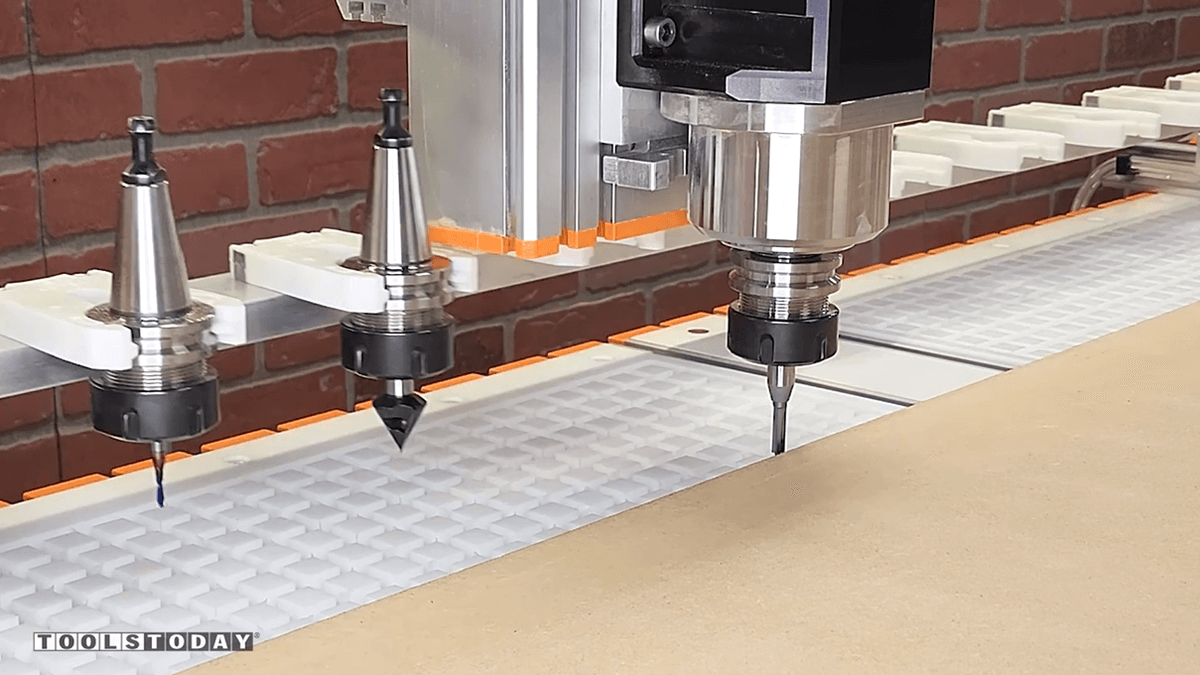
If you cut cabinet parts from plywood, veneered panels, or melamine on a CNC, a compression spiral bit is a production workhorse. Its cutting geometry helps protect the top and bottom faces of a panel as the bit cuts through it.
The detail that matters is where the upcut section ends and the downcut section begins. The cut must be deep enough for the downcut portion to engage the top face. A shallow first pass with the wrong compression bit can still chip that surface. Match the bit's geometry, cutting length, and diameter to your sheet thickness and toolpath.
Buy it when: You routinely cut finished sheet goods on a CNC and need clean edges on both faces.
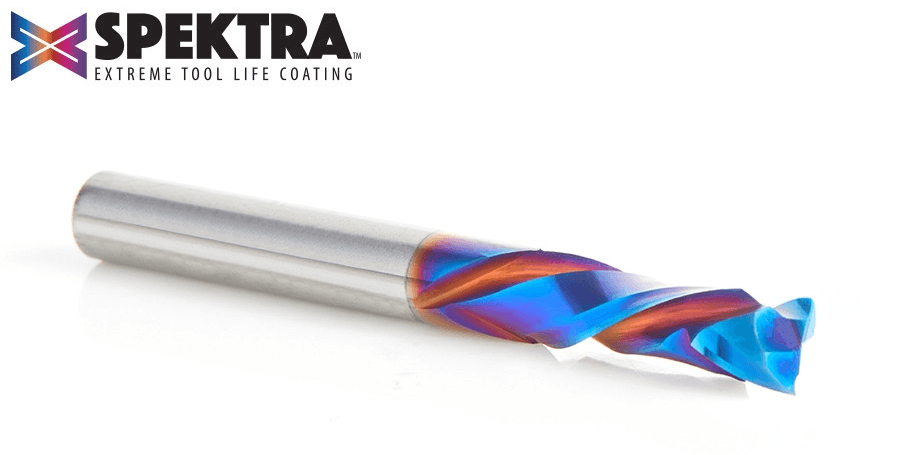
46170-K Spektra™ Extreme Tool Life Coated Compression Spiral CNC Router Bits with special unique carbide & nACo® nanocomposite coating for longer lifetime in abrasive material. Designed for CNC applications requiring high feed rates and flawless compression cuts. Particularly suitable for double-sided melamine or laminated material.
2. Downcut Spiral Bit: Protect the Visible Top Face
A downcut bit is useful for shallow dados, pockets, and cuts where the top surface must stay clean. Think of a groove in a prefinished cabinet panel or a shallow recess that will remain visible during assembly.
Because a downcut pushes chips into the cut, pay attention to cut depth and chip removal. It is not automatically the best choice for a deep slot or a full-depth profile cut.
Buy it when: Top-edge quality matters more than aggressive chip evacuation, especially for shallow work in veneered or laminated panels.
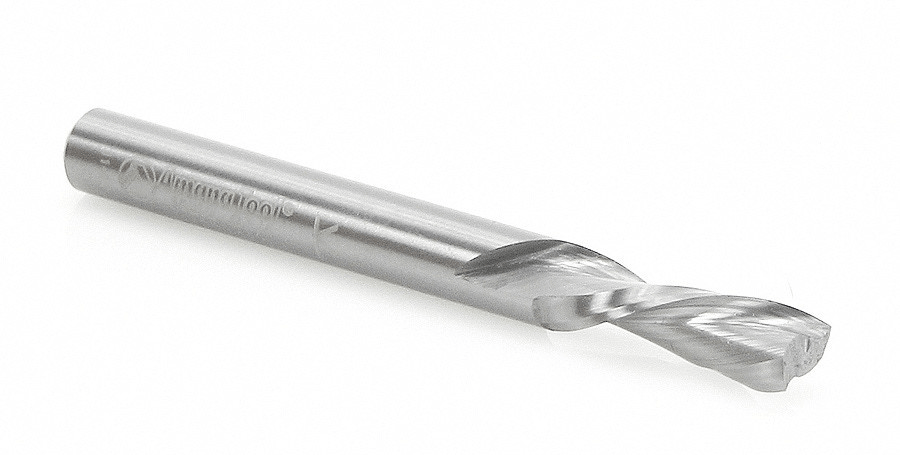 Amana Tool 46202 Solid Carbide Spiral Plunge Bits for all router types combine a shearing action in cutting with an augering action in chip clearance. The shearing action yields an especially clean & accurate cut, while the augering action clears chips from the cut. The “down-cut” cuts from the surface down, leaving a smooth edge at the surface.
3. Upcut Spiral Bit: Clear Chips from Deeper Cuts
An upcut bit pulls chips out of a groove or pocket. That makes it useful for deeper dados, mortises, and other operations where chips could otherwise collect in the cut. The trade-off is that an upcut can lift fibers or chip a delicate top face.
For a cabinet shop, the question is not “upcut or downcut—which is better?” It is which face must look clean, and how deep is the cut? Many shops have a use for both.
Buy it when: You regularly route deeper joinery or work in solid wood where chip removal is a priority.
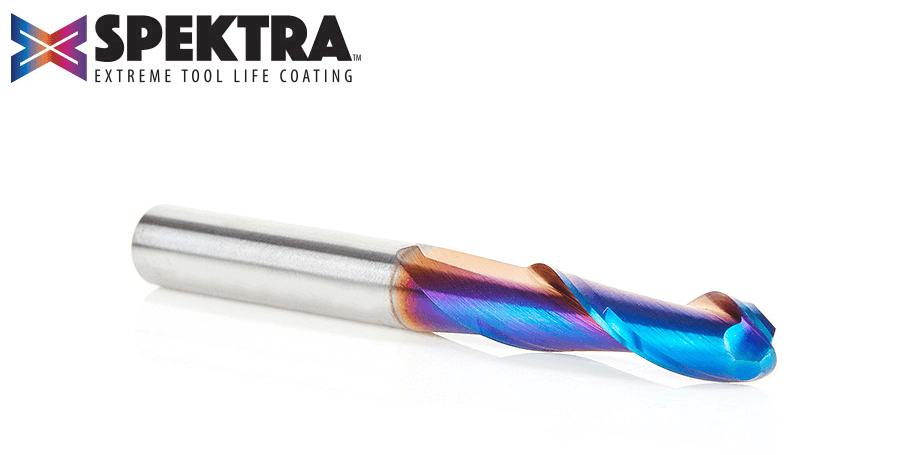 The Amana Tool® 46376-K SC Spektra Up-Cut Ball Nose Spiral Router Bits leave an excellent finish and expel chips quickly. Used for carving, decorative doors and sign manufacturing.
For Cabinet Joinery and Assembly
4. Undersized Plywood Dado Bit: Fit Today's Plywood
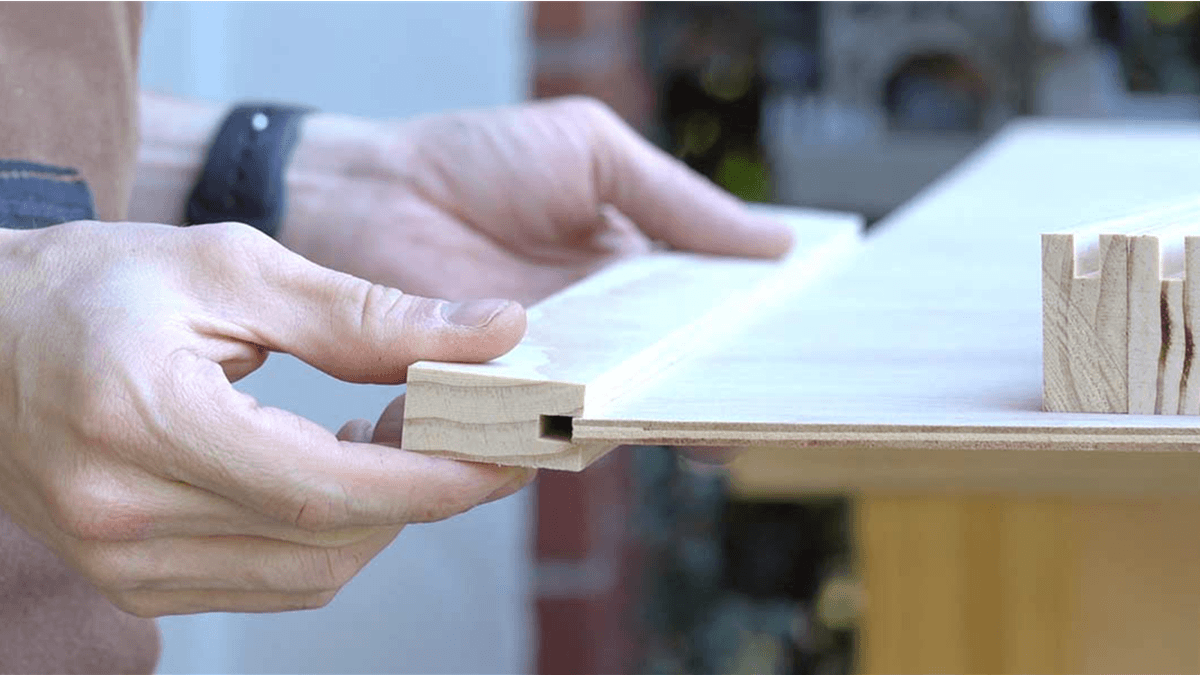
A sheet sold as 3/4-inch plywood is often less than 3/4 inch thick. For a snug-fitting dado cut in one pass, choose a bit whose cutting diameter matches the panel’s actual thickness. A standard 3/4-inch-diameter bit may cut a groove that’s too wide; undersized plywood dado bits offer diameters suited to common plywood thicknesses. Measure your material and make a test cut before routing the full batch.
Measure the actual panels you use before choosing a bit. Thickness can vary between products and batches, and a test cut tells you more than the nominal size on the invoice. If your shop uses CNC toolpaths or multiple passes to dial in dado width, a dedicated undersized bit may be less important.
Buy it when: You cut the same plywood joinery repeatedly with a handheld router or router table and want a reliable fit with a simple setup.
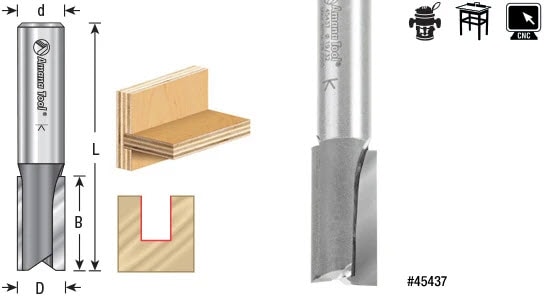 Undersized Plywood Dado Plunge Router Bits cut dadoes and grooves dimensioned perfectly for plywood, flakeboard and other sheet materials for which standard size bits are too large.
5. Straight Plunge Bit: Everyday Bench Routing
A straight plunge bit still earns its place beside spiral tooling. It can cut grooves, dados, and recesses with a handheld router or router table, making it handy for one-off cabinet parts, installation adjustments, and jobs that do not justify a CNC setup.
Choose a diameter that matches the work you do, and use a cutting length no longer than necessary. For a precision dado, make a test cut in the actual material and check the fit before routing the full batch.
Buy it when: You need a versatile bit for bench work and occasional joinery.
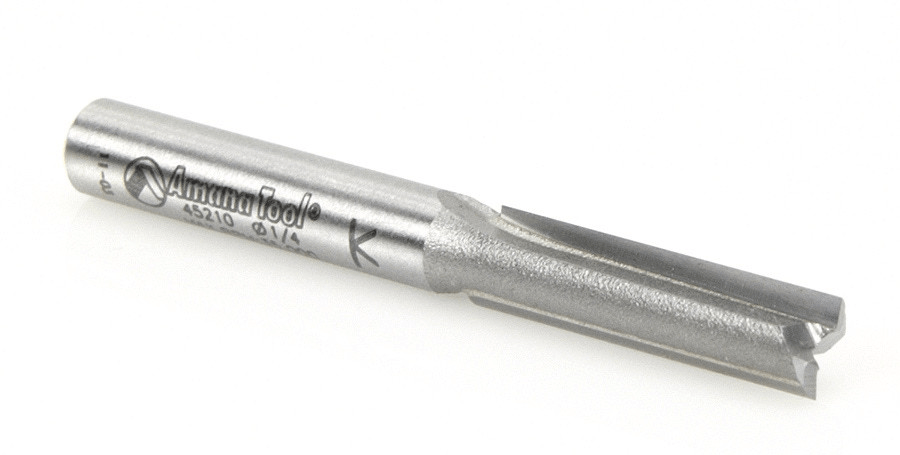 Amana Tool 45210 Carbide Tipped Straight Plunge High Production Router Bit For any application, always select a straight plunge router bit with the shortest cutting edges and the shortest overall length that will reach the required cut depth. Excessive length intensifies deflection and vibration, which degrade cut quality and lead to tool breakage.
6. Rabbeting Bit: Repeatable Edge Recesses
Rabbets can locate cabinet backs, inset panels, or other parts that sit against the edge of a workpiece. A bearing-guided rabbeting bit makes it practical to cut a consistent recess along an edge without setting up a separate fence for every cut.
Check the rabbet width and depth your construction method requires. A bit with interchangeable bearings can cover several widths, but a router bit is only one way to make this joint; a table saw or CNC may already handle it efficiently in your shop.
Buy it when: You regularly cut edge rabbets with a router, especially in small batches or custom work.
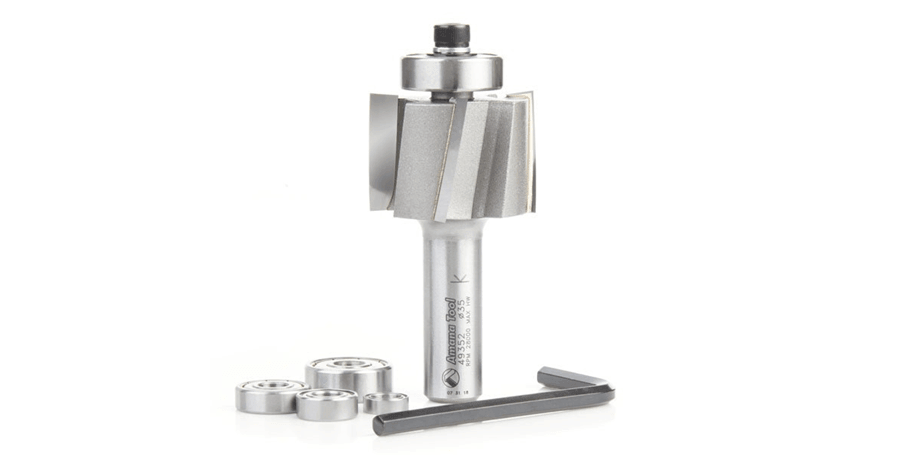 Amana Tool 49352 Multi-Rabbet Bit steps in 1/16" increments from a 1/4" cut depth to 1/2", simply by switching ball-bearing guides. The smaller the bearing, the deeper the rabbet. Five different bearings are provided.
 For Trimming and Finishing Cabinet Parts
7. Flush Trim Bit: Follow Templates and Clean Up Edges
Cabinet shops use flush trim bits to follow templates, duplicate shaped parts, and bring an applied or rough-cut edge flush with a reference surface. The bearing position matters: choose a top- or bottom-bearing bit according to where the template or finished reference edge sits in your setup.
Match the cutting height to the material and avoid excessive bit length. For larger amounts of waste, remove most of the material first rather than asking the flush trim bit to do all the work.
Buy it when: You use templates, make shaped parts, or frequently clean up applied edges.
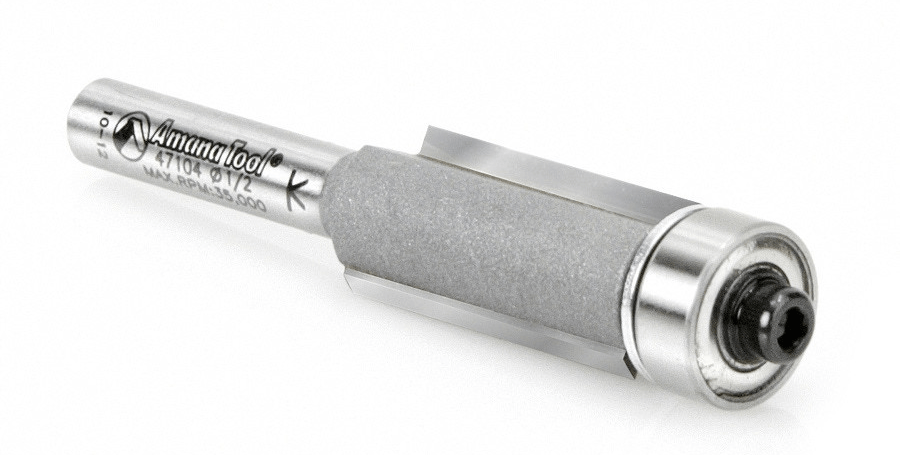 Amana Tool 47104 Flush Trim 2-Flute Bit is an excellent general-purpose choice, providing fast cuts and good finishes. It also be purchased in packs of 2 or 5, or with rotatable / replacable insert blades for at least 4 times longer tool life.
 8. Roundover Bit: Ease Exposed Edges
Cabinet boxes may have few visible routed edges, but shelves, face frames, doors, and built-in details often benefit from a small roundover. It removes a sharp corner and creates a consistent finished edge across repeated parts.
Choose the radius to suit the part. A subtle easing cut on a shelf serves a different purpose from a pronounced profile on a door or furniture-style cabinet.
Buy it when: Your shop finishes exposed wood edges in-house.
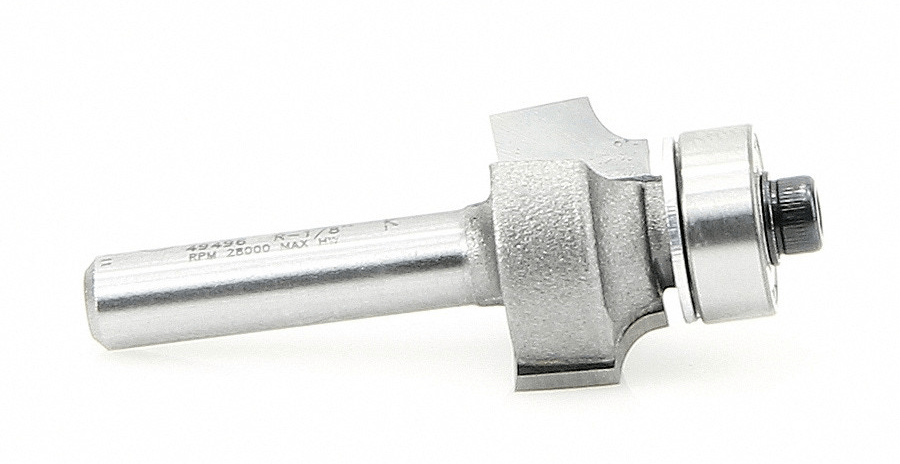 Amana Tool 49496 Corner Rounding w/ Lower Ball Bearing Router Bit THE basic edge-forming bit, the corner-rounding bit rounds an edge to a given radius. The tool is shouldered to cut a fillet. The cut can be used to ease edges, as a simple profile, or as a part of a complex one. Also known as roundover, rounding over, and quarter-round.
9. Chamfer Bit: Make a Clean, Repeatable Bevel
A chamfer can soften an exposed edge while keeping a more angular look than a roundover. It can also help a shop repeat the same edge detail across doors, shelves, and trim components.
There is no need to buy every angle. Start with the profile specified most often in your work, and check how its scale looks on an actual sample before running a batch.
Buy it when: Chamfered edges are part of your cabinet designs or finish details.
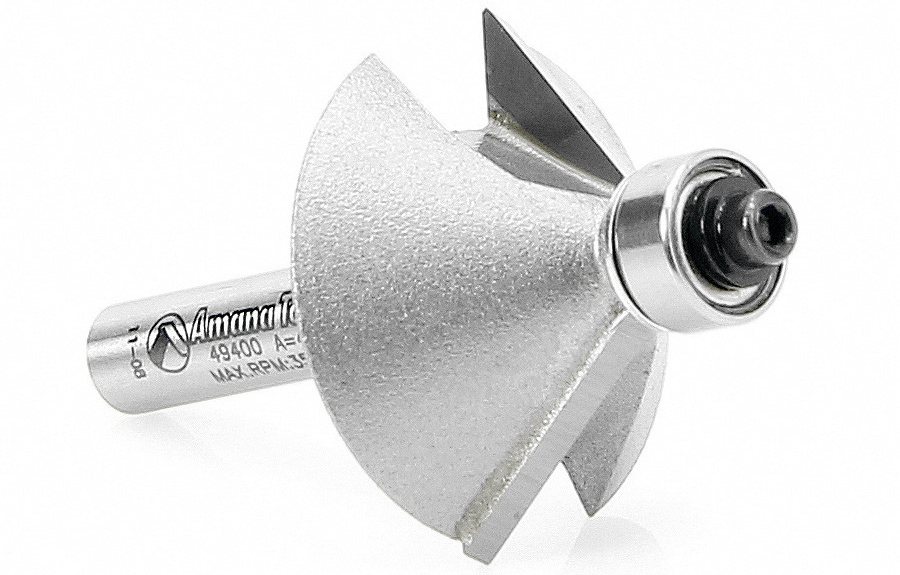 Amana Tool 49400 Carbide Tipped Chamfer 45 Degree w/ Lower Ball Bearing Router Bit Produces crisp, uniform edges at accurate angles to make chamfer or bevel edges for decorative effect, or to form edge miter joints
For Shops That Build Their Own Doors
10. Stile-and-Rail Bit Set: Make Frame-and-Panel Doors
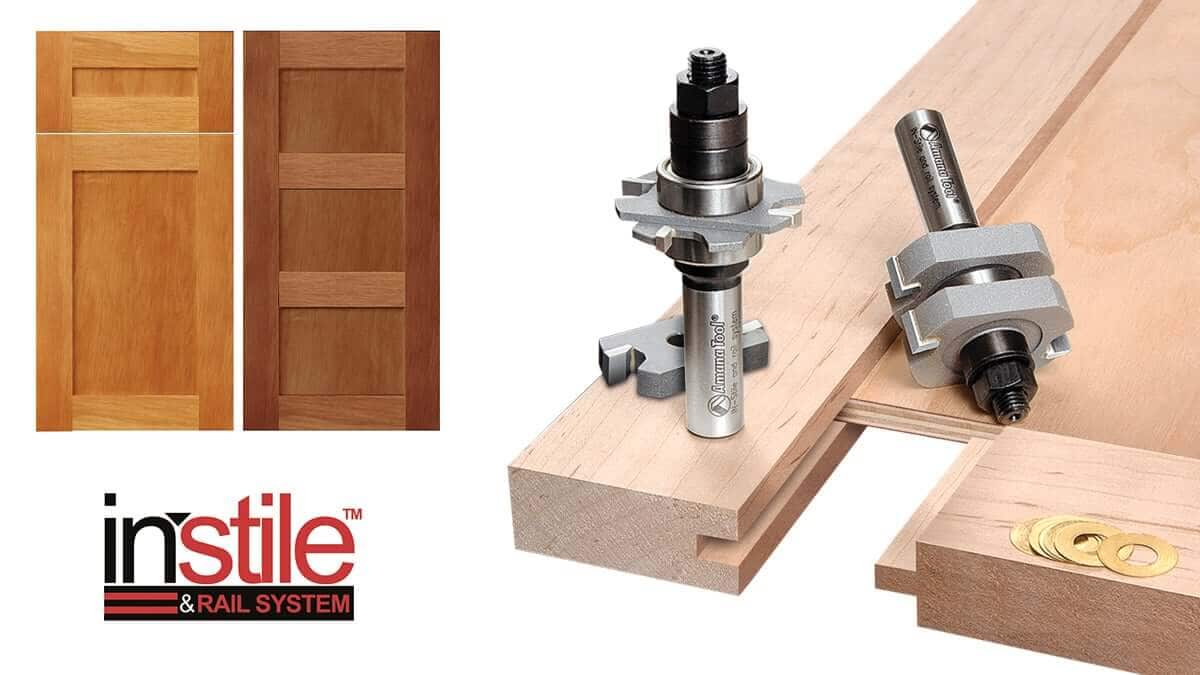
If your shop makes its own frame-and-panel cabinet doors, a matched stile-and-rail bit set produces the corresponding profiles and joints for the frame. Match the set to your door style and stock thickness, and make setup samples before cutting production parts.
This is a meaningful cabinet-shop tool, but it is not universal. Many shops buy doors or use other construction methods. If that describes your workflow, this bit set can wait.
Buy it when: You build frame-and-panel doors in-house often enough to justify a repeatable router-table setup.
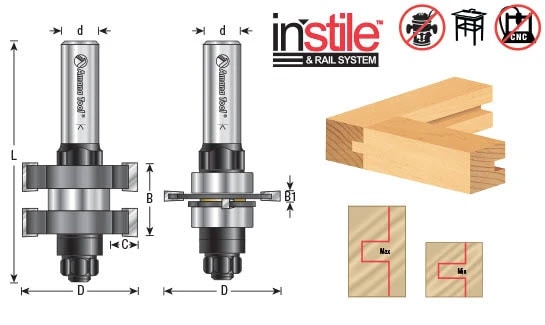 Amana Tool 55438 Carbide Tipped InStile & Rail Mission Style Adjustable Router Bit Set for Plywood Eliminate panel rattle with Amana's new router bit sets designed specifically for today's plywoods. The perfect fix for undersized plywood flat panel "Mission Style" cabinet doors.
11. Raised Panel Bit: An Optional Tool for Traditional Doors
A raised panel bit shapes the center panel of a traditional frame-and-panel door. It can be useful for custom doors, furniture-style cabinetry, and matching existing work. It is a specialized purchase, not a prerequisite for building cabinets—or even for building doors with flat panels.
Large raised panel bits require an appropriate router-table setup, careful workholding, multiple light passes, and attention to the bit manufacturer's speed limits. Choose a profile that matches the stile-and-rail design and the door style you actually sell.
Buy it when: Your shop regularly produces raised-panel doors rather than buying them or using flat panels.
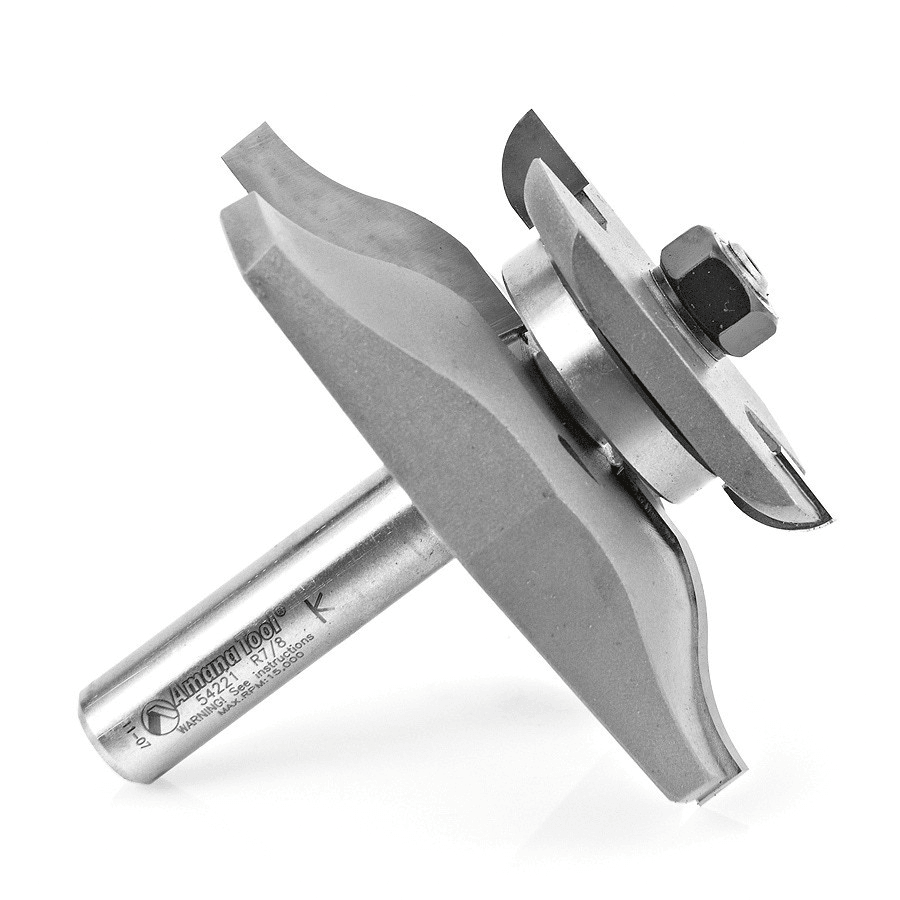 Amana Tool 54221 Carbide Tipped Ogee Raised Panel Router Bit with Back Cutter is similar to standard horizontal raised panel bits, but includes a back cutter for flush alignment with door frames.
What Should Your Cabinet Shop Buy First?
If you cut sheet goods on a CNC: Start with the compression bit that matches your usual material and thickness. Add downcut and upcut bits for the specific shallow or deeper operations your jobs require.
If you build cabinets mainly with handheld routers and a router table: Prioritize the dado, straight, rabbeting, and flush trim bits that match your construction method. Add the edge profile you use most often.
If you build doors in-house: Choose stile-and-rail tooling for the door style you produce. Add a raised panel bit only if raised panels are part of that work.
The best bit collection is the one that fits your materials, machines, and repeatable shop processes. For more on deciding whether to make or buy cabinet doors, see The Truth About Cabinet Doors: What Most Shops Actually Do Today.
FAQs
What router bits do I really need for cabinet making?
At a minimum, most cabinet shops need a compression spiral bit (for sheet goods), a straight or upcut bit (for grooves and dados), a flush trim bit, and a roundover or chamfer bit. From there, you can add specialty bits like rabbeting, ogee, or raised panel bits depending on the type of cabinetry you build.
Are spiral router bits better than straight bits?
Spiral bits often cut cleaner and evacuate chips more efficiently than straight bits, especially in CNC applications. However, straight bits are still useful for general-purpose routing, especially with handheld routers and router tables where simplicity and cost matter.
Do I need different router bits for CNC and handheld routers?
Some bits—like compression spirals—are primarily used in CNC machines, while others—like flush trim and edge profile bits—are more common with handheld routers or router tables. Many bits, such as upcut and downcut spirals, can be used in both depending on the task.
What is the best router bit for cutting plywood cabinets?
A compression spiral bit is usually the best choice for cutting plywood on a CNC because it leaves clean edges on both the top and bottom surfaces. For handheld routing, a downcut spiral bit can help keep the top edge clean.
How do I choose the best router bit for my shop?
Choose router bits based on the materials you cut, the machines you use (CNC vs handheld), and the type of work you do most often. Look for high-quality carbide, use the shortest bit that gets the job done, and prioritize bits that improve cut quality and efficiency in your most common operations.