Specialty Router Bits for Millwork Shops: The Profiles That Set You Apart
Table of Contents
In our article 10 Router Bits Every Millwork Shop Needs, we focused on the everyday workhorses: compression spirals, spoilboard surfacing bits, flush trim bits, rabbeting bits, and other core tooling found in most professional shops.
This article is different.
These are not router bits every millwork shop needs. Some may only be used for specific architectural details, restoration jobs, custom interiors, or specialty components. But for the shops that need them, these profiles are essential.
Specialty router bits allow millwork shops to offer products their competitors may not be equipped to produce in-house: decorative wall paneling, traditional moldings, window components, handrails, and other high-value architectural details.
In other words, these are the bits that help turn a standard shop into a specialty shop.
Paneling & Decorative Wall Treatments
Decorative wall treatments are a major opportunity for millwork shops. From traditional wainscoting to modern reeded walls, customers are using architectural paneling to add texture, depth, and custom character to interiors.
V-Paneling Bits
V-paneling router bits create clean V-groove details in wall panels, ceilings, doors, and decorative surfaces.
These profiles are often used for shiplap-style panels, beadboard-inspired surfaces, farmhouse interiors, coastal designs, and contemporary feature walls. For CNC-equipped shops, V-paneling can be repeated accurately across large sheets or custom panel layouts.
Wainscot Paneling Bits
Wainscot paneling router bits are used to create the decorative profiles found in traditional wall panel systems.
Wainscoting remains popular in dining rooms, hallways, offices, libraries, stairways, and luxury residential interiors. These bits are especially useful for shops producing custom architectural paneling or matching existing details in restoration work.
Reed Edge Bits
Reed edge router bits create decorative reeded or ribbed profiles that add texture to wood surfaces.
Reeded details are especially popular on wall panels, kitchen islands, cabinet doors, vanities, reception desks, and furniture accents. The look feels custom and architectural, but with the right tooling, it can be produced efficiently and consistently.
Shop takeaway: Paneling and wall-treatment bits help millwork shops move beyond standard cabinetry and into custom interior details that can command premium pricing.
Traditional Trim & Molding Production
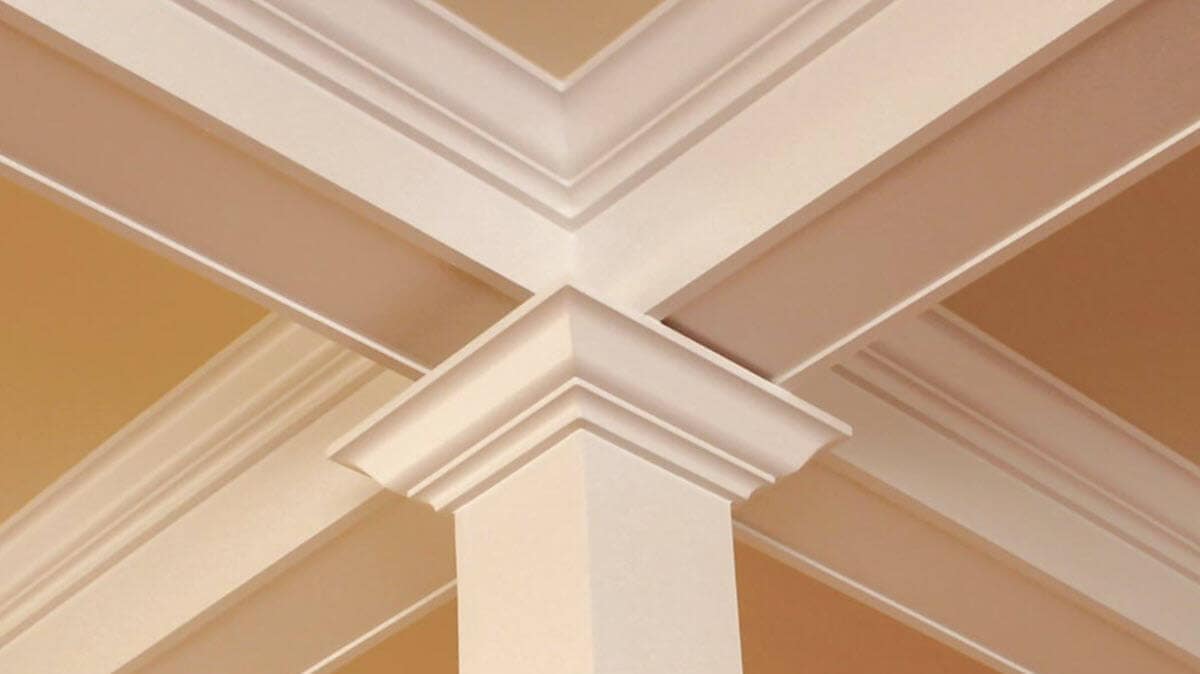
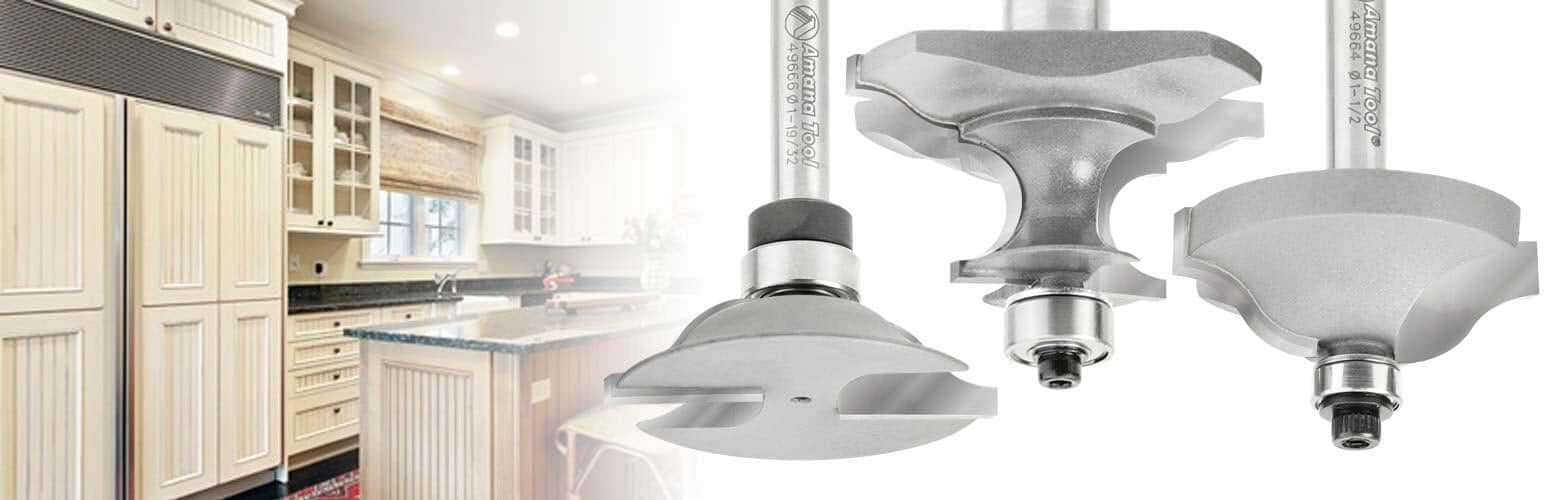
Custom trim and molding work is one of the clearest ways millwork shops separate themselves from general woodworking or cabinet shops. A client may need to match historic casing, reproduce a crown profile, create custom base molding, or add decorative details to built-ins and furniture.
Architectural Bits for Base, Crown & Furniture Molding
Architectural and furniture molding router bits are used to create decorative molding profiles for trim, furniture, cabinetry, and architectural millwork.
They are especially useful for short-run custom work. If a project requires a specific profile, a small quantity, or a detail that is not available off the shelf, the right architectural molding bit gives the shop more control over design and production.
Cove & Bead Bits
Cove and bead router bits create classic decorative transitions found throughout traditional millwork.
Cove profiles soften inside curves and transitions, while bead details add a small rounded line that creates shadow, definition, and a finished architectural look. These profiles are common in built-ins, mantels, bookcases, furniture, cabinet details, and trim assemblies.
Beading & Fluting Bits
Beading and fluting router bits add decorative grooves, beads, and linear details to millwork components.
Fluting is often associated with columns, pilasters, mantels, classical trim, and traditional architectural details. Beading can create fine decorative lines on cabinet parts, furniture components, moldings, and panels.
Shop takeaway: Traditional molding and decorative profile bits help shops produce custom architectural details, match existing trim, and take on projects that require more than standard off-the-shelf material.
Doors & Window Components
Door and window work is more specialized than general trim or cabinet production. These components often require precise profiles, repeatable setups, and clean mating edges.
Many shops will never need to manufacture sash or window components in-house. But for restoration millwork shops, custom home builders, and specialty fabricators, the right window and door tooling can be essential.
Window Edge Bits
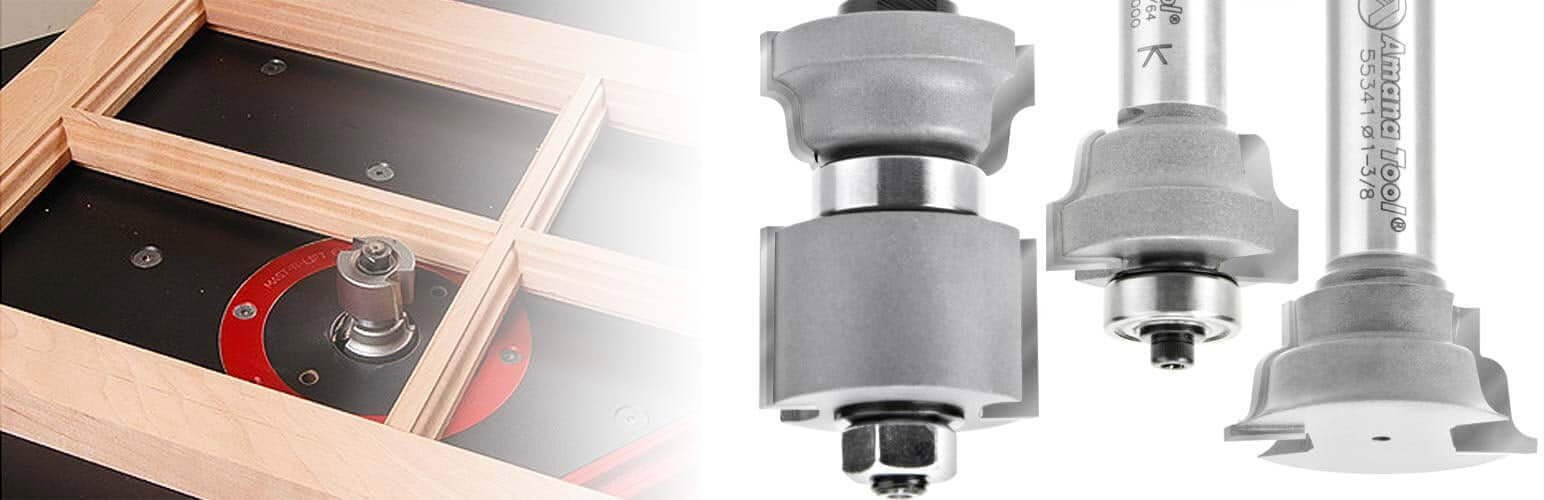
Window sill and window edge router bits are used to shape exposed edges and profiles found on window components.
These profiles matter because window parts are both functional and decorative. A sill or edge detail may need to shed water, align with surrounding trim, and maintain a finished architectural appearance.
Sash & Window Assembly Bits
Sash and window assembly router bits are designed for the joinery and profiles used in traditional wood window construction.
These bits are most relevant for shops that build or restore wood windows. They allow a shop to reproduce traditional details or fabricate custom window parts in-house instead of relying on standard replacement components.
Shop takeaway: Door and window bits are not general-purpose tools, but they are essential for shops that produce custom or restoration components where standard profiles will not work.
Stair & Rail Components
Stair and rail work is one of the most specialized areas of architectural millwork. Handrails must look good, feel comfortable, and maintain consistent profiles across long runs, turns, fittings, and transitions.
Because of the skill and precision involved, stair work is often a premium service. Shops that can produce or match rail components in-house may be able to take on projects that other shops have to outsource.
Handrail Bits
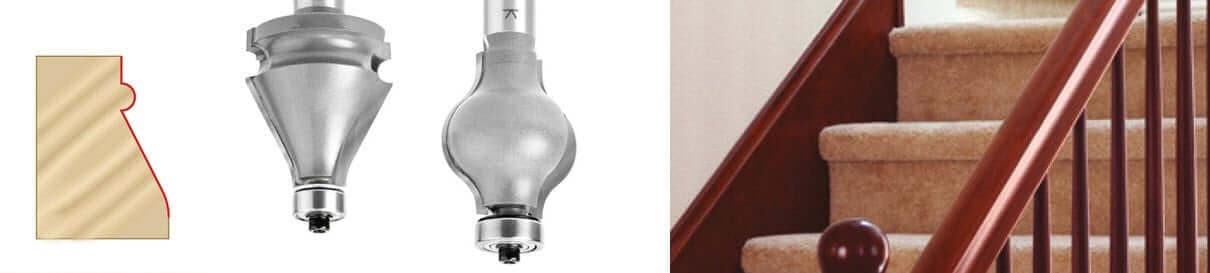
Handrail router bits are used to create rounded, shaped, or decorative handrail profiles for stair systems and architectural railings.
A good handrail profile is not only decorative. It also affects how the rail feels in the hand. Comfort, consistency, and appearance all matter, especially in custom homes, commercial interiors, and restoration projects.
Handrail bits can be especially useful when a shop needs to match an existing rail profile, produce a custom staircase, or create architectural railing components that are not available as standard stock material.
Shop takeaway: Stair and rail tooling can help a millwork shop compete in a more specialized, less commodity-driven category of work.
When Does It Make Sense to Invest in Specialty Router Bits?
Specialty router bits are not always the first bits a millwork shop should buy. For many shops, it makes sense to start with the production essentials first.
But once a shop begins receiving requests for more specialized work, the right bit can quickly pay for itself.
Consider investing in specialty router bits when:
- You receive repeat requests for the same profile or detail.
- You want to keep more custom production in-house.
- You need to match existing architectural moldings or historic profiles.
- You are expanding into wall paneling, trim, windows, stairs, or restoration work.
- You want to reduce outsourcing delays and improve control over quality.
- You see an opportunity to offer a higher-margin specialty product.
The goal is not to buy every profile available. The goal is to choose specialty bits that match the kind of work your shop actually wants to produce.
The Right Specialty Bit Can Create an Entire Product Line
General-purpose router bits keep a millwork shop running. Specialty router bits help define what kind of shop it can become.
A compression spiral bit may be used every day. A spoilboard bit may be critical to keeping the CNC table flat. But a wainscot bit, reeding bit, sash bit, or handrail bit can allow a shop to offer a product its competitors cannot easily produce.
That is where specialty tooling becomes more than a cutting tool. It becomes a business advantage.
Whether your shop produces decorative wall panels, custom trim, historic window components, or architectural stair parts, the right specialty router bits can help you expand your capabilities, differentiate your work, and capture the kinds of projects where craftsmanship still commands a premium.